

Research activities
Basic Research
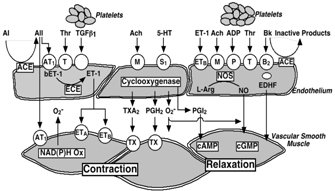
The research of Prof. Thomas F. Lüscher has focussed for more than 25 years on the role of endothelium-derived mediators, i.e. nitric oxide (NO), reactive oxygen species (O2-), prostaglandins (PGH2 and TXA2), endothelin-1 (ET-1) and tissue factor in the regulation of vascular tone, platelet-vessel wall interaction, coagulation as well as vascular structure and plaque formation (Fig. 1).
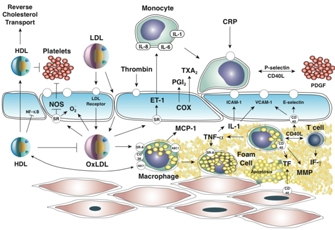
The role of endothelium-derived vasoactive substancese was not only investigated under physiological conditions, but also in aging, hypertension, hyperlipidemia, diabetes and atherosclerosis using modern cellular and molecular techniques as well as genetically engineered animal models mimicking these disease conditions. This research was not only highly cited in the medical literature, but contributed significantly to a novel concept of cardiovascular regulation in health and disease (Fig. 2).
In addition, similar projects focus on the pathogenesis of coronary bypass graft disease which affects saphenous veins implanted into the coronary circulation, but nit internal mammary artery grafts. Viological differences between these two blood vessels explain the different attrition rates and are of interest to understand vascular disease in general.
Clinical Research
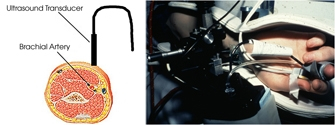
The aim of the clinical research programme is the translation of the findings of the basic research programme to the bedside. It focusses on vascular dysfunction in patients with hypertension, hyperlipidemia, coronary artery disease and congestive heart failure. To study peripheral and coronary arteries in vivo, these studies employ plethysmography, ultrasound (Fig. 3), coronary angiography (Fig. 4), positron emission tomography magnetic resonance imaging and recently optical coherence tomography. In particular, the effects of nutrients such as coffee and chocolade as well as pharmacological interventions are investigated.


A major subject is also inflammation and coronary artery disease. Indeed, the research team was able to show that patients with inflammatory diseases such as rheumatoid arthritis also exhibit endothelial dysfunction, and that this alteration can in part be reversed by an anti-inflammatory treatment with the tumor necrosis factor antibody infliximab. As patients with rheumatoid arthritis also have a two-fold higher risk of myocardial infarction compared to healthy age-mathced controls, these findings support the concept that inflammation is an important feature of atherosclerosis and coronary artery disease. This is further persued by the programme project of the Swiss National Research Foundation „Inflammation and acute coronary syndromes“ where inflammatory mechanisms of acute coronary occlusion (see „Heart attack - The Silent Killer“) and thrombosis (see „Coagulation: - The Secrets behind Starting and Stopping the Bleeding Process“) are investigated (Fig. 5).
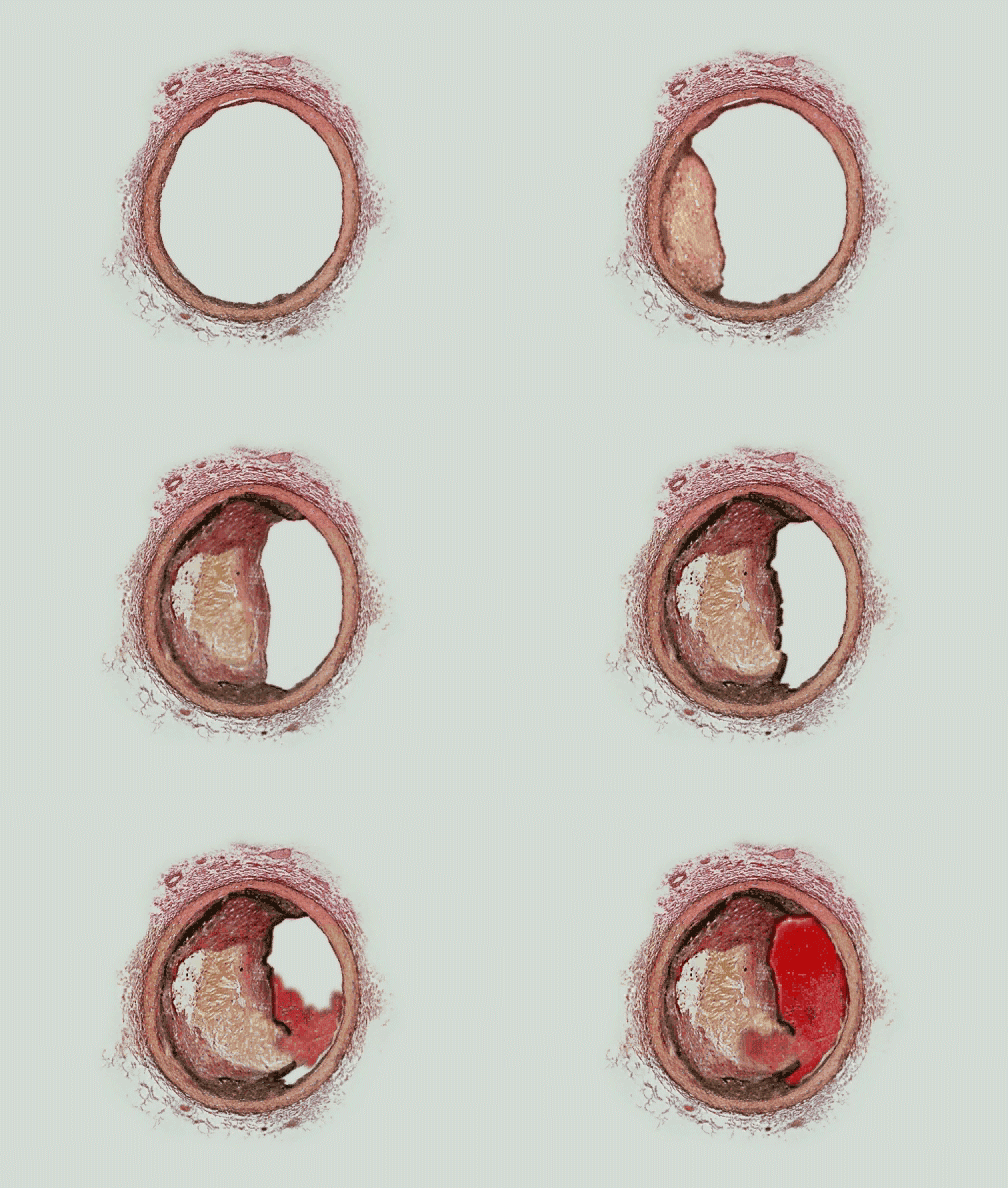
To see the development of an atherosclerotic plaque in a coronary artery over decades until it ruptures and causes an acute occlusion of the vessel and in turn a myocardial infarction is shown in the movie vulnarable plaque.